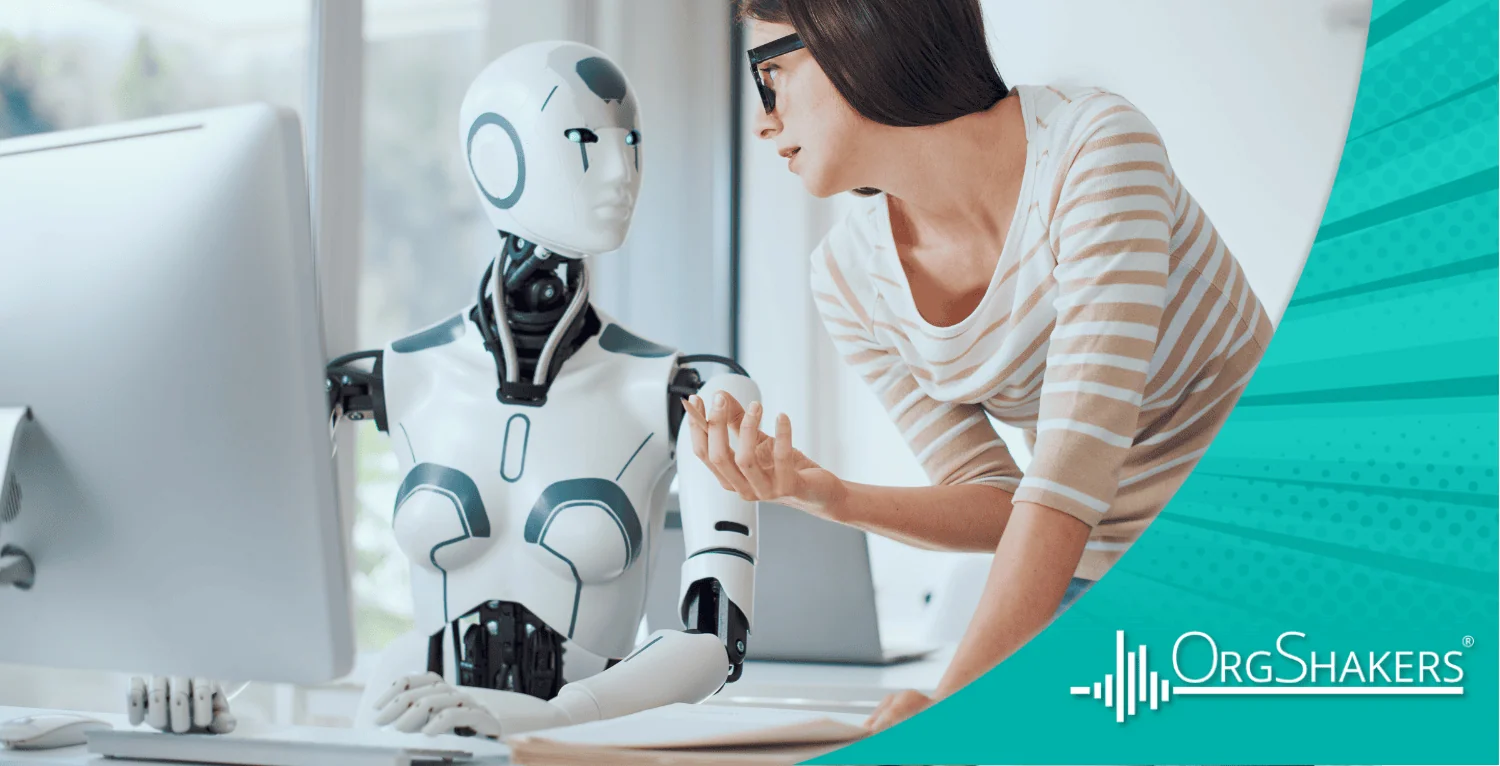
Would you want your manager to be AI?
It is a slightly uncomfortable question, but one worth asking as organizations rethink what management looks like in an AI-enabled workplace.
At a recent conference, delegates were asked whether they thought having generative AI as their manager would make work somewhat better or somewhat worse. Around half said it would be somewhat worse, while 32% said they would prefer a hybrid human-AI manager and 37% said they wanted a human manager.
The results become even more interesting when compared with a global survey conducted beforehand: 59% of employees said generative AI could do a better job than their current manager, 42% said they would like a mix of human and AI management, and 48% believed AI would eventually replace human managers.
So, perhaps the question isn’t whether AI can manage people, but whether there are specific aspects of management we want it to oversee or perform.
There are obvious candidates. AI can summarize performance data, identify patterns, manage schedules, prepare reports and handle administrative processes that consume significant amounts of managerial time. Gartner’s 2026 research found that 45% of managers said AI had improved their teams’ work as much as they expected, while the organization has also highlighted the increasingly important role managers play in helping employees use AI effectively.
But performance management is different.
Do we really want an AI system to tell an employee that they are underperforming? To determine whether someone is ready for promotion? To interpret why an otherwise high-performing employee has suddenly disengaged? To conduct a performance appraisal?
These aren’t simply data problems. They are human problems, and they require more delicate, human solutions. A direct query to a generative AI agent results in recognition by AI that some work is better done by humans.
And there is another issue that may need to be considered: what happens to managers when AI takes away the work they have traditionally associated with being good at management?
Managers can become heavily invested in operational tasks because they are tangible. There is comfort in completing the spreadsheet, organizing the process or producing the report. These activities have clear beginnings and endings, and success can be measured relatively easily.
The more difficult aspects of management, such as building trust, navigating conflict, understanding culture, coaching someone through uncertainty and creating a sense of belonging, are much harder to quantify.
If AI takes over the quantitative operational work, managers may find themselves with fewer of the tasks that provide an immediate sense of competence and with more of the hard-to-measure work that requires emotional intelligence, judgment and ambiguity.
That could create a confidence problem.
The future manager may therefore need to become more human, not less.
Rather than spending their time coordinating information, the manager of the future may need to spend more time interpreting it. Rather than monitoring every task, they may need to understand what motivates the person doing it. Rather than providing answers, they may need to ask better questions.
This transition won’t necessarily be easy. Current research from BCG’s 2026 AI at Work survey found that nearly half of respondents now spend more time managing and directing AI than doing the work itself, while 41% of regular AI users report increased cognitive load. The managerial role is already changing, and that makes the answer to “Do you want an AI manager?” surprisingly optimistic.
So perhaps we don’t need AI to become the manager. Perhaps we need AI to give managers the time, information and capacity to become better leaders.
The opportunity isn’t to automate humans out of management. It is to automate enough of the operational work that managers can spend more time doing the part of their job that only a human can do.
If you would like to discuss what a ‘manager of the future’ will look like and how this can play into your sustainability processes, please get in touch with me at amanda@orgshakers.com