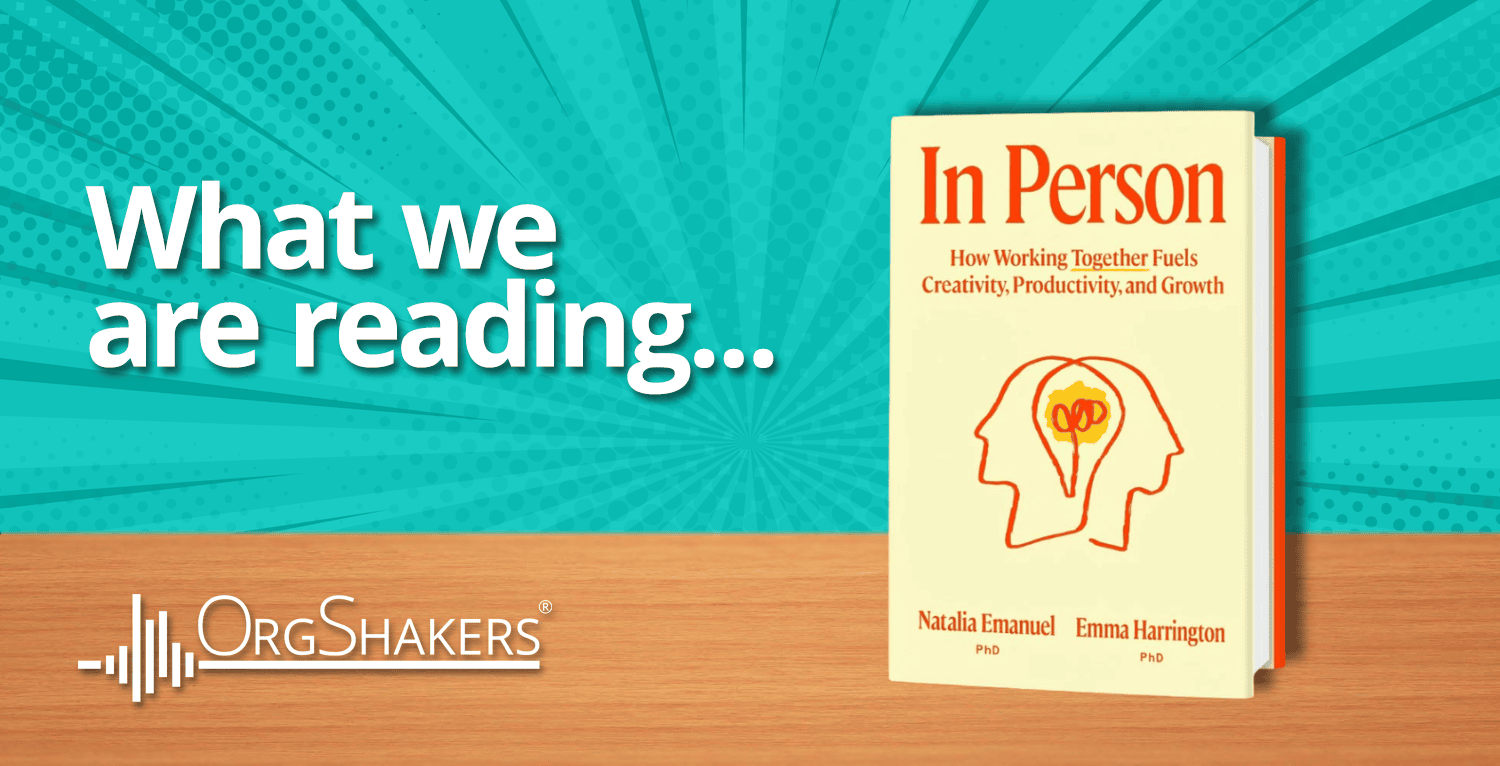
For this month’s reading pick, we turned our attention to a question that continues to shape the modern workplace: what do we gain when we work together in person? In In Person: How Working Together Fuels Creativity, Productivity, and Growth, economists Natalia Emanuel and Emma Harrington bring fresh evidence to the debate around remote, hybrid, and office-based work, challenging organizations to look beyond competing opinions and consider what the research actually tells us.
Both authors are Harvard-trained economists whose research explores how workplace arrangements influence performance, learning, and collaboration. Drawing on years of research across different industries, they offer an evidence-based perspective on the benefits of working alongside colleagues, while acknowledging the flexibility that remote work can provide.
At its core, the book argues that although remote working can be effective for completing individual tasks, it can make other important aspects of work more difficult. Informal feedback, spontaneous conversations, mentoring, and creative problem-solving are all harder to replicate when colleagues are physically separated. These interactions may seem incidental, but Natalia and Emma suggest that they play a significant role in how people develop their skills and generate new ideas.
The authors explore several dimensions of working together, from the importance of workplace friendships and cohesive company culture to the role of proximity in creativity and professional development. A particularly interesting theme is the relationship between productivity and quality. Completing more tasks does not necessarily mean producing better work, and the authors encourage employers to consider the longer-term effects of their working arrangements, rather than focusing exclusively on immediate output.
Importantly, In Person is not simply an argument for bringing everyone back to the office. The authors recognize the benefits of flexibility and make the case for a more considered approach to hybrid working. They examine how organizations can determine when in-person collaboration is most valuable, coordinate office attendance around meaningful interactions, and implement policies that encourage connection rather than simply measuring how often employees show up.
One of the book’s greatest strengths is its practical relevance for business and HR leaders. Rather than treating workplace policy as a choice between employee freedom and business performance, Natalia and Emma encourage organizations to think more carefully about how the two can work together. Their emphasis on evidence over assumptions is particularly valuable in a debate that can quickly become polarized.
Overall, In Person is a timely and thought-provoking read for employers navigating the future of work. It offers a useful reminder that the value of the workplace lies not simply in where employees sit, but in what happens when they come together. For employers reviewing hybrid policies, developing managers, or looking to strengthen organizational culture, it provides a compelling case for making in-person time more intentional and productive.
If you would like to discuss how to design a working model that balances flexibility with collaboration and connection in your organization, please do get in touch with us today.
And in the meantime, this is well worth adding to your reading list if you are rethinking how your people work best together. You can grab a copy here in the UK and here in the US.