Menu

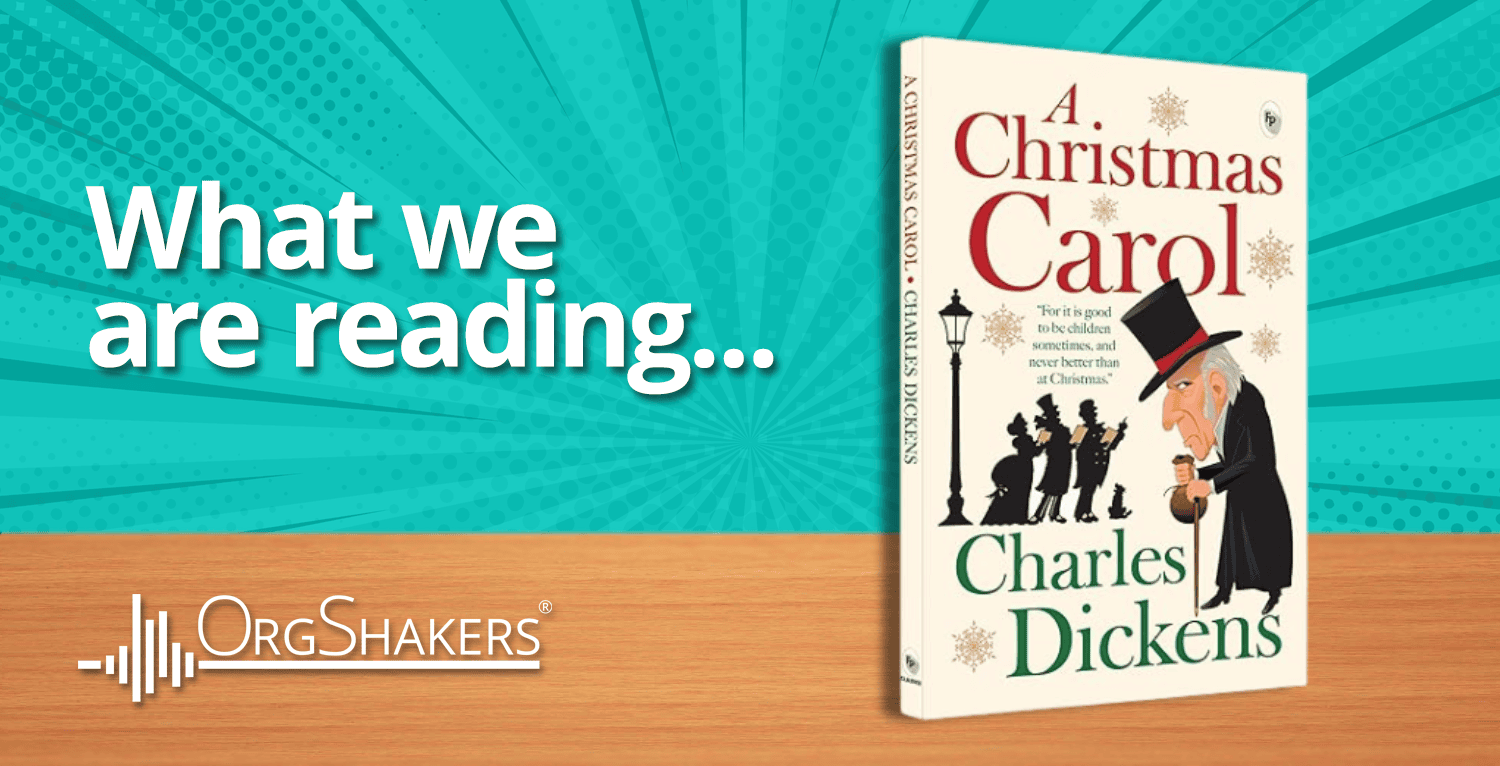
What We’re Reading: A Christmas Carol by Charles Dickens
As we head into December, we wanted our final read of the year to feel seasonally appropriate while still delivering meaningful insights for leaders and HR professionals. And after looking at a range of options, we quickly realised: you can’t beat a classic. And so, this month, we are reading A Christmas Carol by Charles Dickens.
Now, it may be a festive staple, but beneath the memorable characters and ghostly scenes lies a powerful commentary on organizational culture, leadership behavior, and the human impact of the workplace. Re-reading it through an HR lens revealed to us just how much Dickens understood about the psychology of people at work…even in the 1800s!
When Dickens sat down to write his classic fable, society was in the midst of rapid industrial changes and ever-growing social inequality, and this fed his deep concern for the treatment of workers and the moral responsibilities that business owners had. If we look at his novella from this perspective, it is in many ways a case study on what happens when leadership lacks those core soft skills and the workplace lacks psychological safety.
At the centre of this story is the infamous (well, infamous in the beginning, anyway) Ebenezer Scrooge: frugal, rigid, emotionally distant, and dismissive of employee wellbeing. He embodies the kind of culture where productivity is prioritized at the expense of people, and where connection is replaced by transactional thinking. Dickens is quick to establish the consequences of this leadership style: poor morale, disengagement, and a workforce (like Bob Cratchit) that feels undervalued but fearful of speaking up about it.
The arrival of the three spirits then becomes a kind of ‘radical’ leadership intervention. The Ghost of Christmas Past exposes the roots of Scrooge’s behavior, the Ghost of Christmas Present highlights the ripple effect of leadership on employee wellbeing, family life, and community, and the Ghost of Christmas Yet to Come serves as a stark illustration of what happens when a leader refuses to adapt (and spoiler alert, it’s not great!).
But as we know, Scrooge successfully transforms from the rigid, unchanging leader to the generous business owner who truly values his employees’ contributions and actively shows it. The novella does a great job of reinforcing this key message that’s particularly resonant at the end of the year: employee experience is built through small, consistent actions. A pay rise for Cratchit, kindness expressed in language, or time given freely are all small, healthy micro-behaviors that come together to create a healthier workplace.
As employers, revisiting A Christmas Carol is a timely reminder that culture is shaped every day through the choices leaders make. And while we may not have ghosts arriving at 1am to deliver our insights, we do have the data, tools and frameworks to support leaders in becoming more conscious and connected.
If you’d like support embedding these principles into your leadership programmes or wider people strategy for the new year to come, please do get in touch with us today.
And in the meantime, grab yourself a copy of Dickens’ Christmas classic and snuggle down with a warm beverage of your choice. But this time, take in this timeless tale with a fresh, employer-focused perspective…you might be surprised what you learn!
Related Posts