Menu

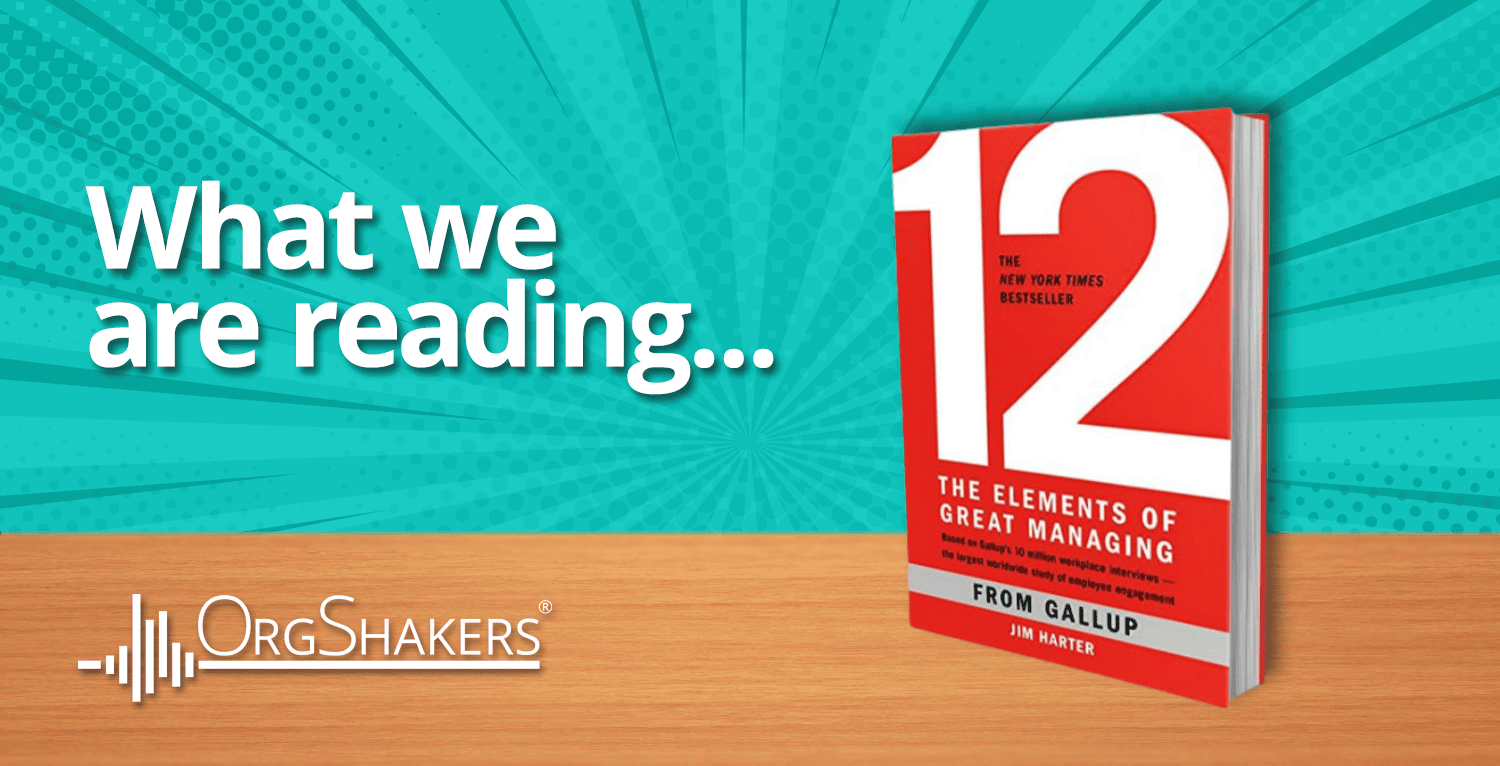
What We’re Reading: 12 by Rodd Wagner and James K. Harter
The new year is a time when many organizations will reflect on performance, engagement and leadership capability, and with this in mind it felt fitting to choose a book that goes back to the fundamentals of what actually makes people thrive at work.
After reviewing several strong contenders, we landed on 12: The Elements of Great Managing by Rodd Wagner and James K. Harter, a book grounded in decades of Gallup research and still strikingly relevant to today’s workplace challenges.
Rodd and James draw on one of the most extensive workplace studies ever conducted, analyzing data from millions of employee interviews across industries and geographies. Their central premise is simple but powerful: great management is not about charisma, perks or performance slogans, it’s about consistently meeting fundamental human needs at work.
The book is built around Gallup’s famous Q12 framework, which identifies twelve core elements that predict employee engagement, performance and retention. These elements range from clarity and access to the right tools, to recognition, development, belonging and purpose. Together, they form a practical blueprint for effective people management.
The early chapters establish why management matters so much. Rodd and James argue that disengagement is rarely an employee problem, but instead almost always a management one. They challenge the idea that engagement can be fixed through broad cultural initiatives alone, instead placing responsibility firmly with frontline managers and the day-to-day experiences they create.
From there, the authors unpack each of the twelve elements in detail, pairing research insights with real-world examples. What makes the book particularly compelling is its clarity: each element is explained in accessible language, with a strong emphasis on behaviors managers can control, rather than abstract leadership theory.
And rather importantly, 12 also challenges some deeply ingrained myths. It questions the over-reliance on annual reviews and the outdated assumption that pay alone drives performance.
The book concludes with a clear message that sustainable performance is built through consistent, human-centred management (and in an age of AI, this message is more relevant than ever).
If you’re looking for a research-backed, practical guide to strengthening leadership capability and improving employee experience in 2025 and beyond, this is a highly recommended read You can grab a copy here in the UK and here in the US.
And if you’d like to explore how these principles can be embedded into your own management frameworks or leadership development programmes, please don’t hesitate to get in touch with us!
Related Posts