A few years ago, the narrative was clear: work had been untethered from place. Talent could live anywhere, companies could hire everywhere, and cities felt less essential (at least, in a professional sense). But that story is now evolving.
Recent data shows that while remote work remains a permanent feature of the labor market, behavior is shifting. Hybrid has become the dominant model, with over half of remote-capable employees now working in a hybrid arrangement rather than fully remote. At the same time, companies are steadily increasing in-office expectations, driven by collaboration, productivity, and communication needs. The result is a subtle but important re-centering to the fact that talent is moving back toward cities. Not necessarily full-time, but with a noticeably renewed intent.
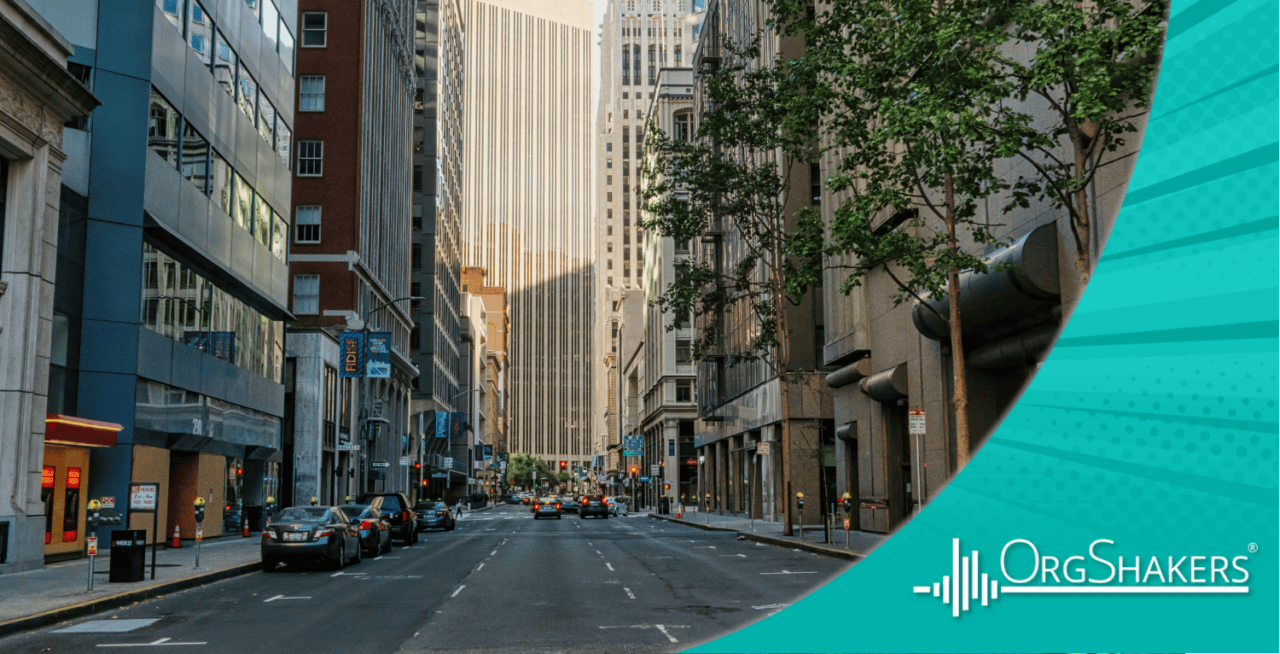
What we are seeing isn’t a reversal of remote work, but rather a redefinition of geography. Cities are no longer just where work happens five days a week. They are becoming hubs that employees return to for connection, visibility, and growth. And data from major urban centers supports this shift; in San Francisco, for example, commuting has begun to rebound, with more workers returning to transit than working fully from home for the first time since the pandemic.
There’s also a generational layer to this. Younger employees, particularly Gen Z, are increasingly choosing in-person work. Not because they lack access to remote options, but because they are seeking connection, mentorship, and career momentum. For many, cities offer proximity and opportunity, which is some that remote environments have consistently struggle to replicate.
For employers, this creates both opportunity and complexity. First, it challenges how they think about talent strategy. During the peak of remote work, organizations expanded, hiring across geographies and often decoupling compensation from location. Now, as employees gravitate back toward urban centers (even on a part-time basis), questions around pay equity, cost-of-living adjustments, and location-based benefits are resurfacing. The old models don’t quite fit the new reality.
Second, it reshapes how we design the employee experience. If the office is no longer a default, it has to be a destination. That means being intentional about when and why people come together. Research shows that hybrid work has settled into predictable patterns, with midweek office attendance peaking as employees coordinate in-person collaboration. Employers and HR have a critical role to play in designing those moments so they actually deliver value.
Third, it raises questions about equity and access. Not all employees can, or in fact want to, relocate to or spend time in cities. If proximity once again becomes a driver of visibility and opportunity, organizations risk reintroducing presenteeism in new ways, so this is where thoughtful policy design becomes essential.
The encouraging news is that organizations are not starting from scratch. The past few years have built new muscles around flexibility, autonomy, and trust. The challenge now is to integrate those strengths with a more place-aware strategy.
However, remote work is not disappearing. In fact, nearly 23% of US employees still work remotely at least part of the time. But the gravitational pull of cities is reasserting itself in a new way, and this cannot afford to be ignored.
Organizations that get this right will treat geography as a strategic lever, not a logistical detail. They will design hybrid models that balance flexibility with intentional in-person experiences, and they will recognize that where people work is no longer just an operational choice, but a cultural signal.
The map of work is once again being redrawn. If you would like to discuss how he can help your company redesign it with purpose, please get in touch with us today!