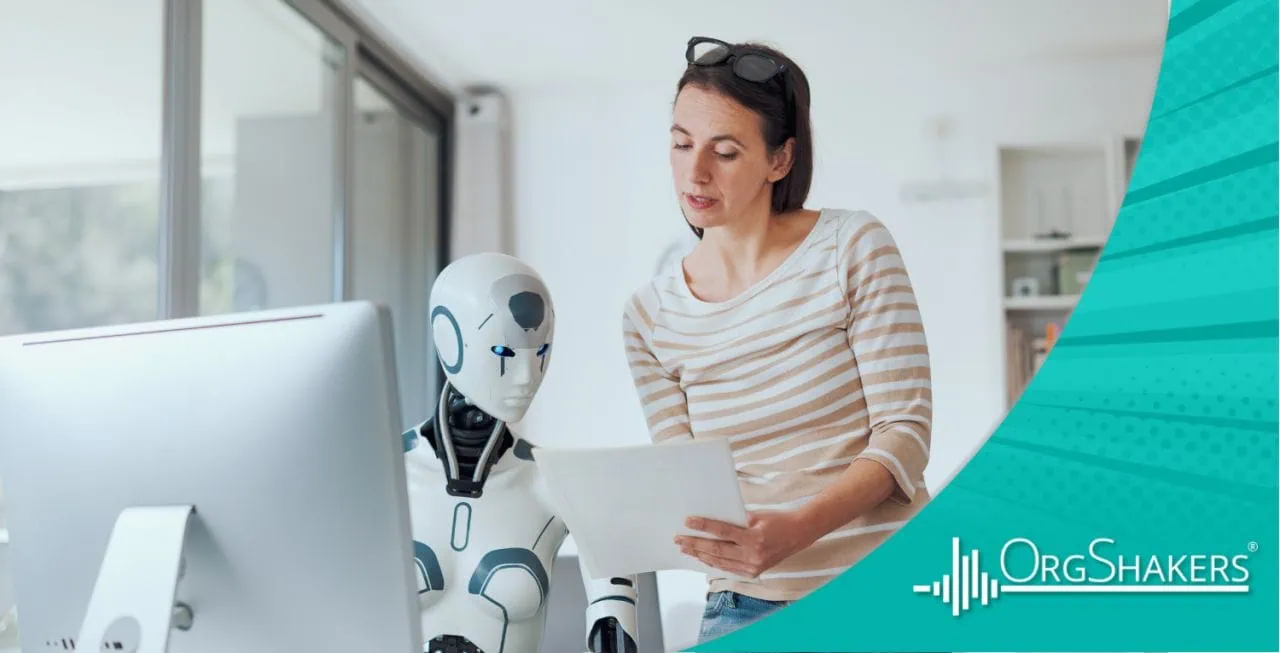
Workplace relationships are changing, and it can feel like we’ve stepped into a science fiction story.
For decades, collaboration meant working alongside managers, teammates, clients, and stakeholders. Today, many employees are adding another working relationship into the mix: generative AI.
Whether it is used to draft emails, summarize meetings, generate presentations, analyze data, or brainstorm ideas, generative AI is increasingly becoming part of the day-to-day workflow. According to a recent McKinsey report, nearly 80% of employees now use generative AI in some capacity at work, whether officially sanctioned or not. At the same time, Deloitte research found that many workers are beginning to describe AI tools in surprisingly human terms, with six in ten employees viewing generative AI as a co-worker.
That shift raises an interesting question for employers and HR leaders: should employees have a relationship with their generative AI?
The answer will differ from employee to employee. What matters most is that, wherever generative AI becomes part of someone’s working routine, clear boundaries remain in place.
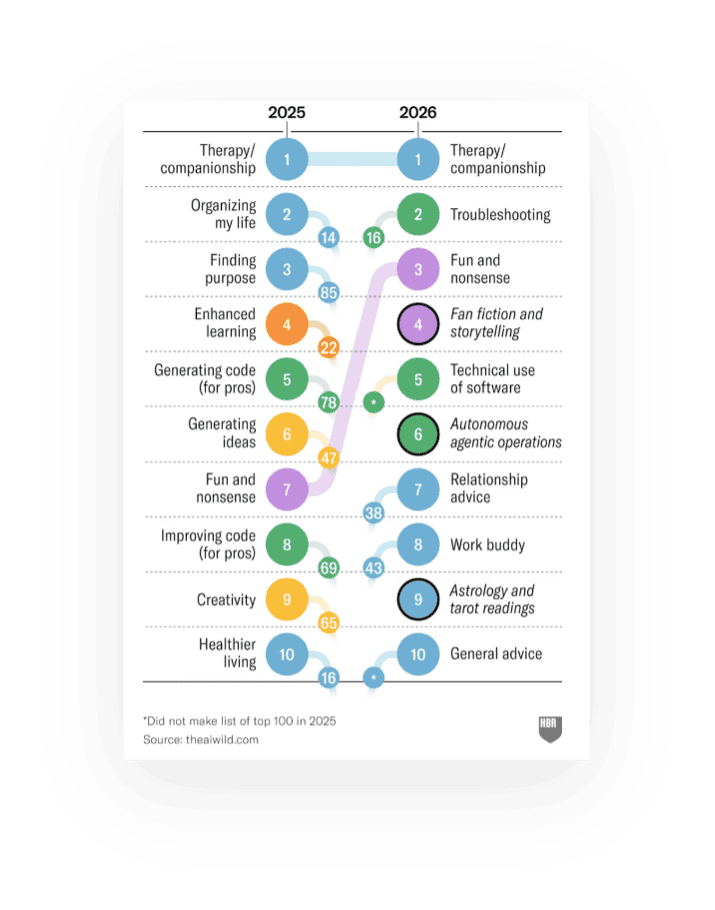
The most effective use of GenAI is rarely purely transactional. Employees who learn how to work with AI often gain significant productivity benefits. They refine prompts, build workflows, test ideas, and use the technology to challenge or accelerate their thinking. In that sense, GenAI can absolutely feel collaborative. But problems begin when the line between ‘tool’ and ‘coworker’ becomes blurred. In fact, if you look at a recent report from Harvard Business Review, you will see that the number one use for GenAI in 2025/26 was ‘Therapy/Companionship’.
One of the biggest risks organizations can face is the tendency for employees to unconsciously offload responsibility onto GenAI. If workers begin viewing it as a colleague who is making decisions on their behalf, accountability can quickly become unclear. In today’s world of work, legally and operationally, responsibility still sits with the human employee and not the technology.
That distinction matters because generative AI still makes mistakes.
AI systems can confidently produce inaccurate information, biased outputs, or flawed assumptions, particularly when prompts lack context or clarity. AI does not truly understand an organization, its culture, regulatory environment, or strategic priorities unless those details are explicitly provided. And when there are gaps in the prompt, the system fills those gaps itself, often based on probability rather than accuracy.
That creates a new capability challenge for organizations. Success with GenAI is no longer just about access to technology; it is about employees developing the judgment and confidence to question outputs, validate information, and maintain ownership of decisions.
In addition, there is also an important psychological dimension to consider. Generative AI is intentionally designed to be engaging, responsive, and affirming. It often mirrors a user’s tone, reinforces their ideas, and delivers answers in a confident, positive way. Over time, this can unintentionally create an echo chamber effect where employees receive reinforcement rather than challenge. Unless users actively ask AI to critique assumptions or present alternative perspectives, the technology will often prioritize agreement and helpfulness over constructive tension.
For leaders, this introduces an interesting cultural question: are organizations encouraging employees to think more critically with GenAI, or simply faster?
There is also a potential confidence issue emerging in some workplaces. If employees increasingly rely on AI to write, analyze, or structure their thinking, some may begin questioning their own value or capability without it. This is why maintaining a healthy emotional distance from AI matters, as employees should feel empowered by these tools, not replaced by them.
The organizations navigating this well educate and train their employees on how and when to use GenAI from the beginning. They are also focusing on building and maintaining a culture of trust, capability, and psychological safety.
Employees need to trust that their organization has clear and responsible AI guidance. They need confidence in their own ability to use the technology effectively. And they need psychological safety to ask questions, challenge outputs, and admit uncertainty without fear of blame.
Ultimately, generative AI works best when treated neither as a machine to blindly obey nor as a coworker to emotionally depend upon. Instead, it should be viewed as a powerful collaborator that can enhance human capability, provided humans remain accountable, critical, and firmly in control.
For employers, that may be the most important AI skill of all. And as agentic AI comes on the scene, this becomes even more critical.
If you would like to discuss how to form robust AI user policy, or training around the use of generative AI to ensure it is optimized best for a human-tech partnership, please get in touch with me at amanda@orgshakers.com.