After discussing the world of HR consulting with Sarah Hamilton-Gill on her podcast, Leap Into HR Consulting, we moved onto looking at the four fundamental shifts that I predict we will be seeing in the near future that HR professionals need to be preparing themselves for.

We discussed the looming edge of the Workforce Cliff, the importance that employers need to be applying to the relationship between humans and technology, and the redefinition of Place and Time in the workplace. The final shift I believe businesses and HR professionals need to be preparing for is the end of jobs altogether.

The ‘job’ – defined as a set of responsibilities assigned to an individual employee – has been the fundamental building block of organizations for millennia. As the requirements of businesses have changed over the years, employers have tweaked and amended the job descriptions of their employees to adapt to these changes.

However, we have seen that the pace of this organizational change has been rapidly accelerated by the influx of new technologies paired with the evaporation of the boundaries of time and geography. Now, employers are beginning to recognize that a more flexible and responsive methodology is needed in order to keep up with this new pace of change, and so I believe we are going to see companies increasingly adopting a skills-based approach to managing work and workers. Deloitte’s 2023 Global Human Capital Trends report supports this notion, as it was discovered that 93% employers believe that moving away from the job construct is important or very important to their organization’s success.

And yet, the research also identified a readiness gap, as only 20% of these employers felt they were very ready to address the movement away from the ‘job’.

This is where HR will play a vital role, as they will be the key to bridging this gap and educating organizations around this new approach to work. And a large part of this will be challenging legacy mindsets and traditional practices that are holding employers back from skills-based work – which Deloitte reported was the main obstacle for 46% of companies.

HR will therefore have to pioneer a shift in the traditional mindset of allocating work to individuals in defined jobs to one where the work is deconstructed and assigned by:

  1. Making the starting point for resource allocation the actual work that needs to be done, broken down into the individual tasks which need to be completed to achieve the required outcomes.
  2. Identifying the optimal combination of human skill, AI, and technology/automation to achieve the required outcomes.
  3. Identifying the optimal contractual engagement model for work that requires human skill, e.g.: employment, freelance, alliances, etc.
  4. Allowing human skill to ‘flow’ to the work instead of being constrained by traditional fixed hierarchies and organizational structures.

Rather than viewing workers as ‘job holders’ performing predefined tasks, it is important to recognize them as individuals with unique skill sets. This will enable employers to match each worker with tasks that align with their specific skills. This work can be performed by a single person, a team, or a group of rotating resources, each contributing their appropriate skills while improving their current ones and developing new ones. This approach will enable workers to maximize their potential and contribute to their personal growth. It will also create a more equitable and human-centric work experience.

If you would like to discuss how OrgShakers can help guide and support you on this journey, please get in touch with me at david@orgshakers.com or reach out through our website here.

David Fairhurst The Founder Of Orgshakers

David Fairhurst is the Founder of OrgShakers. He is widely considered to be one of the world’s leading HR practitioners and is a respected thought leader, business communicator, and government advisor.

After discussing the world of HR consulting with Sarah Hamilton-Gill on her podcast, Leap Into HR Consulting, we moved onto looking at the four fundamental shifts that I predict we will be seeing in the near future that HR professionals need to be preparing themselves for.

The first shift was the Workforce Cliff, and the second is the relationship between humans and technology.

There has been a lot of scaremongering in the media about the effects that AI integration will have on jobs – the most notable statistic being that 300 million jobs are predicted to be lost in American and European markets, according to a report from Goldman Sachs.

However, if you dig a little deeper into this report, you discover that the authors predict that just 7% of current US employment will be fully substituted by AI, with 30% being unaffected, and 68% being complimented by its introduction.

If we take a stroll back through history, there have been many instances where workplace automation has actually resulted in either the creation of new roles or the technology becoming ‘co-workers’ with us.

A great example of technology as ‘co-workers’ is the introduction of the ATM (automated teller machines) in the US in the late 1960s. While the initial objective was to replace bank tellers and reduce the real estate needed for bank branches, the graph below highlights how, in fact, the opposite happened:

Graph of ATMs being created in comparison to the amount of bank teller jobs available.

As the number of ATMs increased, so did the number of branches being opened, and the number of bank tellers. The key to this relationship being successful was employees understanding how to work with this new technology in order to deliver greater efficiency and better customer service (e.g.: the ATMs handled the basic transactions freeing up the bank tellers to deliver higher-value customer services).

As organizations introduce AI into the workplace, HR will play a pivotal role supporting these new co-worker relationships. As Melissa Swift describes in her book Work Here Now, HR will be ‘couples counsellors’ for humans and technology, coaching employees on how to successfully interact with newly integrated tech in order to optimize its (and their) abilities.

As AI has the potential to become a disruptive force within organizations – changing their structures, workflows, and processes – HR will be responsible for ensuring these changes are implemented in a way which maintains employee morale and productivity, and which secures a pipeline of future talent through enhancing a company’s reputation.

By acting as a pillar of this newly found co-existence with expanding technology, HR professionals will demonstrate how AI tools can help employees become their best selves. This will happen through nudging them to learn new behaviors, correct old habits, enhance key skills, and free up their time for more meaningful work as it can perform the more admin-based tasks.

As we continue to watch AI integration in the workplace take shape, it is important for HR to get ahead of this curve and be proactive when it comes to managing the impacts of this new technological age. If you would like to discuss how OrgShakers can help you do this, please get in touch with me at david@orgshakers.com

David Fairhurst Founder Of Orgshakers


David Fairhurst is the Founder of OrgShakers. He is widely considered to be one of the world’s leading HR practitioners and is a respected thought leader, business communicator, and government advisor.

I recently had the pleasure of being invited onto Sarah Hamilton-Gill’s HR podcast, Leap Into HR Consulting, where the two of us discussed some of the fundamental shifts that HR professionals should expect to see in the near future.

The first of these shifts is what I call the Workforce Cliff. Flashback to almost a decade ago, when my team and I first examined data that compared the growth rate of jobs in comparison to the growth rate of economically active people. The results we published predicted that at around about now – 2023/4 – there would be more jobs in the UK than people to fill them.

Put simply, not enough babies were being born, so demand would eventually outstrip supply.

Fast forward to the present day and – as predicted – businesses are struggling to fill key roles. This is because as the economy restabilises after the effects of the pandemic, we have been set back on a path that edges us closer and closer to the Workforce Cliff.

The most recent data highlights that the growth rate for jobs is 0.94%, whereas the population growth rate for economically active people is only 0.37%. This is broadly in line with pre-pandemic rates and will create an ever-tightening labour market.

According to the Future of Jobs 2023 Report, companies have identified the availability of talent and a shortage of key skills the as two of the major issues that will negatively impact business performance over the next five years. For example, one recent study has found that only one in ten UK workers possess digital skills – which is an alarming statistic as the integration of AI begins to happen all around us.

One solution for filling these gaps lies in migration – a recent survey found that over half (52%) of small and medium-sized businesses (SMEs) are in favour of opening the UK’s doors to overseas workers to plug vacancies.

However, there are many untapped pools of talent on our own doorsteps that are being completely overlooked. For one thing, 20.8% of the working age UK population are considered economically inactive, and the largest proportion of this group are those aged between 50-64. The pandemic resulted in many midlife workers taking early retirement or being made redundant, and so there is a substantial pool of experienced and skilled workers who companies are not targeting with their attraction strategies.

The same can be said for younger workers too; many young people are now starting their careers later, so employers need to be considering what they can do to make their job offerings more attractive to this group.

Employee benefits that are on offer are a great way of accessing a specific talent pool, as each generation of workers tend to have different wants, and so these benefits packages can be made more unique to specific needs.

For instance, younger workers value work-life balance and mental health support. Midlife workers, on the other hand, value flexibility and the ability to work remotely.

The point is, if employers are being more purposeful with their attraction strategies, they will be able to move away from the Workforce Cliff’s edge. This means considering talent in all corners of the market, and ensuring that their business is an attractive one for a diverse set of people; whether they be older, younger, have an accessibility need, or be in a minority group.

Pair this with an added focus on learning and development (92% of job candidates use L&D opportunities as a deciding factor when considering job offers) and companies will have fewer issues being able to fill their skills gaps.  

If you would like to discuss how OrgShakers can help perfect your talent attraction plan and strengthen your learning and development strategies, please get in touch with me at david@orgshakers.com

David Fairhurst Founder Of Orgshakers Llc

David Fairhurst is the Founder of OrgShakers. He is widely considered to be one of the world’s leading HR practitioners and is a respected thought leader, business communicator, and government advisor.

This month, we have got our hands on a copy of Stephen Frost’s latest book, The Key to Inclusion. With input from authors who are experts in their field of diversity, equity, and inclusion (DEI), Stephen has put together and edited this practical guide with strong strategies, examples, and case studies demonstrating how to cultivate and embed an inclusive culture in your workplace.

The book is divided up into four parts which address the key topics surrounding DEI, as well as identifying and examining the drivers of inclusion:

Part One: Unlocking You

In the first part of his book, Stephen takes the reader through the concept of ‘cognitive load’ – which is the amount of information the working memory can hold at one time – and identifies this as a barrier to inclusion. For DEI to succeed in a workplace, leaders must recognize and adapt to their employees’ cognitive load and find ways of reducing it.

He then goes on to outline the formation of a ‘growth mindset’ and highlights how this is a key ingredient of an inclusive company, as well as how leaders can begin to develop cultural intelligence to foster an inclusive working environment.

Part Two: Unlocking Your Team

In the second part, Stephen zooms in on the ideal management practices that leaders can adopt to foster an inclusive environment, and he does this by looking at two key areas: the structure that leaders adopt for their teams and how the fourth industrial revolution – the introduction and assimilation of artificial intelligence and new technologies – influences these structures.

Part Three: Unlocking Your Organization

In the penultimate part, the focus is centred around rethinking strategy so that inclusion can be repositioned into the strategic fabric of the organization. This process is broken down into phases:

  • Diversity 101 (foundations) – incorporating the minimum legislative approach to diversity.
  • Diversity 2.0 (appearance) – ‘Taking a stand’, which is manifested in corporate messaging.
  • Inclusion 3.0 (interior structures) – Practicing diversity throughout all behaviors and layers of the organization.
  • Inclusion 4.0 – Overhauling the entire system and not simply incorporating an inclusion element.

The chapter then goes on to examine the key drivers of inclusion and how to interact with each of them, and these are data and measurement, governance, leadership, and system and processes, in addition to strategy from the previous part.

Part Four: Unlocking the Future

In the final part of Stephen’s book, he advises employers how they can look ahead to embed inclusion at the centre of technological, leadership, and problem-solving skills. This begins with finding the best way to measure your inclusion impact, and harnessing this data to create a roadmap for your inclusion initiatives.

He then goes on to contextualize this by industry, including tech, TV and film, and financial services.

The book takes the reader on a journey of inclusion, from understanding it at its foundations to making it a staple part of the foundations of an entire company. By doing so, employers can begin to unlock its power – and this book is the first step to finding that key.

If you would like to purchase a copy of Stephen’s book head over here for the UK and over here for the US.

If you would like to discuss how we can help implement a DEI and inclusion strategy, please get in touch with us.

Buzzword lovers, rejoice. There’s a new phrase circulating the corporate social media sphere: grumpy staying.

If you are yet to come across it, ‘grumpy staying’ refers to an employee who remains in their current role while being openly frustrated, less productive, and visibly agitated with their working environment – but avoids doing anything to improve their situation or attitude. With the cost-of-living crisis still continuing, many workers do not feel at liberty to just up and leave their job, hence leading to a rise in this trend.

At first glance, this would sound like the diagnosis of a ‘bad apple’ employee. But if we dig a little deeper, it is highly likely that an employee isn’t just frustrated for no reason – even if they are reluctant to (or don’t know how to) communicate this.

What might be more productive for employers to do is view ‘grumpy staying’ as a symptom of a larger issue – by diagnosing it at its root, they will be able to remedy it and ensure that other employers do not spiral into these same feelings of frustration. So, what are some possible causes of ‘grumpy staying’?

  • Toxic work environment – this requires looking at the culture of the organization; is it inclusive? Is there constant conflict? Are there a number of complaints about bullying? Having HR conduct a culture audit is a great way of getting to the bottom of this.
  • Lack of career development – 75% of employees believe that it’s important that their employer invests in their personal development. If an employee feels that they don’t have a clear path for development because of a lack of developmental opportunities, this may be leading to them feeling stuck, and subsequently ‘grumpy staying’.
  • No work-life balance – in the modern working world, especially with the post-COVID carpe diem mindset – work-life balance has become a swaying factor for many employees’ contentedness at work. This is confirmed by Randstad’s 2023 report which found that 94% of employees believe work-life balance is important – so if they feel they are not being afforded it, this may lead to ‘grumpy staying’!
  • Personal issues – if, as a manager, you notice an employee acting out of character, this may be a sign that something is going on outside of the workplace. This would be a great opportunity to schedule a one-to-one and discuss how you have noticed a change and wanted to check-in, creating a space for an open dialogue where the employee will feel more comfortable being honest.

Of course, there are instances where someone is frustrated because they feel unfulfilled at work, and this can be tricker to approach as an employer. However, one strategy we have found for this is the idea of creating ‘squiggle room’ – that is, offering job crafting opportunities where suitable to foster innovation and allow an employee to bring some of their personal passions into their working life. This can be a great way of boosting morale and warding off the ‘grumpy staying’ attitude.

If you would like to discuss how we can help your company find the source of this ‘grumpy staying’ and prevent it from affecting productivity, please get in touch with us.

Stories of ghosts, ghouls, spirits, and paranormal activity are not hard to come by in the modern world. The media is inundated with gothic movies, tv shows, and literature, and for many people a good ghost story gets their spine tingling.

However, while the idea of ghosts may be entertainment for some, for others, the concept of apparitions, hauntings, and possessions are very real. According to a 2019 IPSOS poll, 46% of Americans believe in ghosts (a percentage that has increased by 14% since 2005). That’s almost half of the entire country.

So I pose you this scenario: what do you do, as an HR professional, if someone in the company believes the workplace is haunted?

Belief is a very powerful force; whether you believe in ghosts or not, for someone that does believe in them, you have to accept that as their reality. This means that while their fear may be intangible, the psychological effects that their fear will have on them are very real.

And there are many instances of hauntings causing chaos in the workplace to prove this. In Orlando, a Japanese restaurateur backed out of his lease because they heard that the premises were allegedly haunted by ghosts and apparitions. The landlord even offered to exorcise the building, but they still refused, and this resulted in a messy court case.

In another occurrence at the Eisenhower Executive Office Building in Washington D.C., many workers reported instances of seeing a woman’s face in a third-floor window. They would also hear a female voice call out their name, followed by footsteps running down the hall – on one occasion they even found a co-workers visiting child talking to an invisible woman in the third-floor conference room. One worker had to quit his job because of this alleged supernatural torment, as he kept finding the photos from his office walls neatly arranged on the floor every morning.

There was even one case of a law firm’s office building being haunted, which lead them to move to a newer building where the unexplained phenomena (keyboards typing by themselves, files shuffling in cabinets in empty rooms) finally ceased.

Whether these hauntings were truly paranormal or not, the effects of them are undeniably real: legal issues, lowered engagement and productivity, loss of staff, and the costs of relocation. These are all big red flags in the corporate world, and so regardless of what has caused them, HR is responsible for managing them accordingly.

What we’re trying to get at here is that whether they believe it or not, an employer has to take these things seriously in order to manager the very real effects that these beliefs have. In countries that are less westernized, the belief of ghosts and spirits is much more prevalent, and so having to deal with a haunted workplace may be much more commonplace somewhere like China, where they still celebrate their Hungry Ghost Festival to avoid the wrath of ghosts. Similarly in Mexico, they celebrate el Dia de los Muertos (the Day of the Dead), where families will welcome back the souls of their deceased relatives.

Belief and superstition can run deep – ever find yourself knocking on wood or crossing your fingers? – and so it is important that these instances are taken seriously and handled expertly so to avoid any of the disruptions that were listed above.

And if that means having to be a Ghostbuster, then grab your overalls.

Networking is more than just a practice, it’s a skill. A skill that many employers tend to foster and encourage in their employees, as it can lead to better cohesion, higher productivity, and more expansion opportunities.

Pre-pandemic, internal networking (which is networking amongst your team members) was a seamless practice, as employees were brushing shoulders, poking heads in doors, and having exchanges by the water-cooler. The focus tended to be around external networking (which is networking outside of the organization).

However, with the mass adoption of remote and hybrid working styles, this has affected the basis of networking as a whole. Employees who were once always around each other in an office are now working from home, and as new employees are onboarded, internal networking has become something that requires a lot more conscious effort. This is particularly noticeable amongst Gen Z workers, with only 23% of them saying that remote work was important to them because they felt that they were missing out on important networking and career development opportunities.

For employers, placing emphasis on how to network in the new age can actually be the deciding factor between attracting a potential new candidate. Ensuring that internal and external networking opportunities are available can make a company a more attractive place to work, but this requires employees to understand what this new networking world looks like and how they can operate in it successfully.

Here’s some new ways of networking that employers can promote to their staff:

  • Virtual Coffees – whether you want staff to reach out beyond your immediate network or get to know the wider team, scheduling a virtual coffee catch-up can be a great way of networking in a remote working world. It can be a short, 15-minute discussion with the sole intention of chatting, catching up, and seeing what opportunities are up for grabs. This offers opportunities for direct mentorship, learning, and development.
  • Attend Online Talks/Events – as the working world continues to digitalize, it is now easier then ever to sign up for free webinars, talks, and events that are held entirely remotely. These can be a great way of expanding one’s network and discovering new ideas or potential new business partnerships.
  • LinkedIn is Your Best Friend – encouraging team members to have a LinkedIn presence not only boosts their personal brand, but it boosts the company’s brand too. Ensure that staff are interacting with social media posts and posting updates of their own in order to appeal to the wider LinkedIn network.

And in terms of how employers can create internal networking opportunities, this is where team building days can be a great tool. If you are a company that operates in a hybrid or remote fashion, making that conscious effort to bring the team together outside of the workplace setting can be a great way to breaking down barriers and encouraging inter-networking.

If you would like to discuss how you create networking opportunities as an attraction and expansion strategy, please get in touch with us.

To understand the next step in the evolution of the workplace, we have to start in a place with apparently little or no connection to modern working practices – the middle of the last Ice Age.

Cro-Magnons – the first modern humans – arrived in Europe around 35,000 years ago. Nomadic hunter-gatherers who lived in groups consisting of several families, they were sophisticated toolmakers using spears and flint knives. And, most importantly for our story of workplace evolution, they had sewing needles which they used to fashion clothes from animal skins which kept the ravages of the freezing Ice Age weather at bay.

So, imagine that one dark winter’s night one of our Cro-Magnons hit upon an idea to while away the hours sat round the campfire. They would produce a tapestry on an animal skin – about a yard in width – depicting that year’s key events.

From that point, of course, the yard-a-year tapestry would quickly become an annual tradition with the result that today our 35,000-year-old tapestry would be a few yards short of twenty miles long. So, what would this twenty-mile tapestry show us?

Well, by the time humans even came close to creating the concept of formal work, the tapestry would already be about twelve miles long (which equates to 60% of the history of modern humans). In other words, for the majority of modern human history ‘work’ was simply hunting and gathering – ah, the simple days.

However, after this point, we would begin to see a subtle change in the story on the tapestry. Although hunting and gathering remains the primary means of food production, we begin to see the first indications of animal domestication. This process builds and builds and triggers the Neolithic evolution – which sees the mass shift to agricultural practices and the liberation of the old ways of existence through the creation of trading. Trade, arguably, was the single biggest idea in the history of humankind, as it suddenly allowed for horizons to expand like never before, and people could begin to specialize and innovate in all the ways we now see today.

So, for most of this twenty-mile tapestry, the evolution of the workplace was a very gradual shift over many generations. However, at around the nineteen and three-quatre mile point things began to change and accelerate at a much more rapid pace – the Industrial revolution.

Kickstarted by Jethro Tull’s mechanized seed drill, humans began to invent technology that would enable them to venture away from agriculture and to other new emerging forms of employment. With the need for manual labor in agriculture having been dramatically reduced, workers were given the liberty to pursue a career in something beyond production.

This revolution took the working world by storm – at the dawn of the eighteenth century 76% of the population of England worked in agriculture, but by the mid-twentieth century it was down to just 4%.

And as we began to work in varying jobs, and the labor market expanded and contracted as new innovations and technologies were introduced, that takes us all the way up to today – where technology now plays such a vital role in the mass majority of jobs.

But one thing that we have noticed with the adoption and implementation of mechanization (from conveyor belts to sewing machines to computers) is also this idea that workers are ‘cogs in the mechanism’, and that an ‘optimized’ worker is one who acts like a machine – productive, consistent, and quick. But what happened in those years of technological advancements was that many employers were trying to make people work like machines (sometimes literally, as Ford’s production line proves), when in reality they should’ve been tapping into the key traits that are fundamentally human.

Yet if you look at what is happening now – with the introduction of artificial intelligence (AI) on a mass scale into the workplace – what we are actually seeing is that we’ve come full circle. We are now trying to make the technology human, and I think that AI is going to be the harbinger for this next step of the evolution of the workplace – the step towards the optimization of our humanity.

The overarching purpose of technological advancements in the workplace has always been to free-up time from repetitive, monotonous tasks so that employees can spend more time doing work that creates greater value for both them and their employer. In essence, the entire reason why we have continued to advance is so that we can get to a point where we have the luxury of time to focus on human capital and unlocking its full capabilities.

And we’re already starting to gradually see this shift on our tapestry; the pandemic had a massive impact on the working world, and sparked a re-evaluation of how we work and why we work. We saw a mindset shift amongst the workforce – a carpe diem effect. Suddenly we were all faced with our own mortality, and this made many realise that if they were going to spend a majority of their life working, they wanted to be doing something they cared about, something that gave them a good work life balance, something that supported them, and something fun.

For employers, this means focusing on workplace strategies that will enable better work-life balance (which improves engagement and reduces burnout), opportunities for job crafting (which creates opportunities for innovation), and support for physical and mental health. These areas are going to become key focal points as the workplace continues to evolve to become people-centric, so for those employers who are already beginning to optimize these, they are going to be ahead of the curve and become some of the most attractive organizations to work for in the market.

Steps are already starting to be taken, but they are baby steps. If you look at our recent poll which sought to discover the most effective way of supporting mental health in the workplace, over half of respondents (55%) cited flexible working, while 23% said mental health days, and 16% chose Employee Assistance Programs.

However, while these are great things, they can almost seem tokenistic. Having an allowance of leave for mental health is good, but is this really support? Same as with flexible working; employees can optimize their time better, but now that they are not physically around their team leaders, it’s harder for managers to be more attentive to someone they only see conditionally through a screen.

So, just as we had maintenance teams that would be on-call to fix any machines that malfunctioned, why should employers not consider the same concept for their people? Having an in-house psychotherapist whose sole responsibility is to support employees and feedback to managers with the appropriate reasonable adjustments will help employers create a real roadmap for support and optimization in the face of mental illness. We are already seeing schools begin to hire full-time counsellors and therapists for this very reason, so why should employers not consider doing the same?

As we continue to weave this tapestry of human history year by year, we can see that the last half mile has seen the most accelerated change. Now, as we begin to adapt the ideology of working smart in a technological and AI-advanced world, employers need to be preparing for the next step in the evolution of the workplace by placing their focus on their people power. That is the key to becoming an organization of tomorrow.

If you would like to discuss all things people strategy, our dedicated team of specialized HR professionals can assist you in all aspects – get in touch with us here.

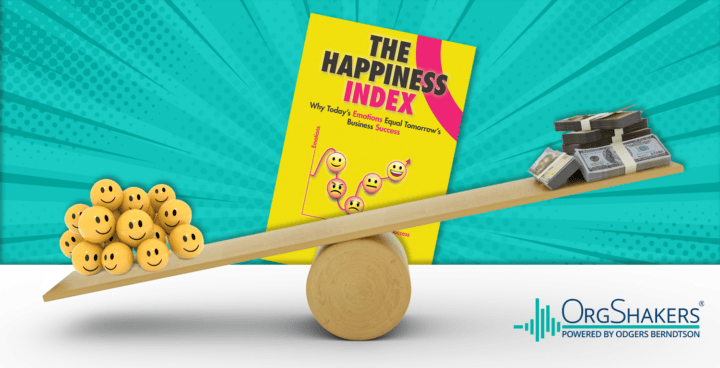
Matt Phelan’s new book The Happiness Index – is released today … and we’ve been lucky enough to get a sneak preview of what we think is a ‘must read’ for HR practitioners and business leaders. 

As the co-founder of a unique platform which helps organisations measure key employee engagement and happiness drivers (also called The Happiness Index!), Matt is a global authority on how people think, feel, and behave in the workplace.

In his book, he sets out to explore how businesses can ensure that the people who fuel the success of their business – their employees – are fully committed to their organizational goals.

To do this he takes a deep dive into the data gathered by The Happiness Index platform from over 100 countries and 2 million employees to help the reader understand what really drives engagement and happiness at work – and how this can be harnessed to accelerate an organization’s performance.

Matt defines employee engagement as what our brains need to thrive at work, and employee happiness as what our hearts need to do the same. Both, he argues, are equally important and consist of 24 neuroscience-based sub-drivers:

Happiness Index Image

By taking this scientific, data-driven approach, the book provides a robust examination of the factors that determine employee engagement and happiness at work, including in-depth interviews with specialists in each of the 24 sub-drivers and compelling case studies from organizations around the world. In doing so, it shows how firms can weave happiness and engagement into the fabric of their people strategy.

In The Happiness Index, Matt expertly paints a picture of a world of work where people can truly thrive and grow – and organizations can truly prosper from that growth. It’s a transformational picture we know HR practitioners and business leaders will find inspiring.

If you would like to discuss engagement strategies in more detail, please get in touch with us on our contact page.

And to get in touch with Matt, head over to his LinkedIn page: https://www.linkedin.com/in/matthewphelan/

While huge strides continue to be made in regard to the treatment of HIV, in the US there are an estimated 1.3 million people who are HIV positive. In the UK, that figure is around 100,000.

Despite the fact that the disease is no longer steeped in the stigma it once was, taboos still pervade around being diagnosed and living with HIV. And the fact is, it has now become something that someone can live with without having any complications, meaning they can live and work just like anyone else.

However, there is still a drought of information and awareness around the disease that can lead to many HIV-positive people feeling uncomfortable with disclosing their status at work and having access to necessary resources.

So, what can employers do to challenge the taboos surrounding HIV?

1. Educate and Raise Awareness

The first step is the most obvious: educate your workforce and raise awareness about the virus. Provide training sessions or workshops to help employees understand what HIV is, how it’s transmitted, and dispel common myths and misconceptions surrounding it. This will help reduce stigma around the topic and instead foster a sense of empathy which, at the same time, will strengthen your people’s power skills.  

2. Encourage Open Communication

Managers who can build trust with their team and present themselves as approachable will be able to find it easier to start a dialogue with staff. This will enable HIV-positive workers to feel more confident in disclosing their status, and they should then be reassured that this disclosure will remain confidential so that their privacy can be respected. This ensures that the employee is getting any necessary support and accommodations without any fear of judgement.

3. Flexible Working Arrangements

Recognize that employees with HIV may have medical appointments and treatments that require a level of flexibility in their work schedule. Offering remote working hours or adjusted working arrangements can help accommodate these needs without having to compromise their job performance.

4. Employee Assistance Programs (EAPs)

EAPs should have tailored resources to support individuals with HIV. This can include access to specialized mental health services, or the appropriate charities and organizations who can better externally support these needs.

5. Regularly Review and Update Policies

Employers should be periodically reviewing their workplace policies in relation to long-term illnesses such as HIV to ensure they remain current and remain aligned with best practices and legal requirements. They can even communicate with HIV positive staff member(s) to help refresh these policies and ensure they are properly reflecting their needs.

Recognizing and understanding how best to support those who are HIV-positive in the workplace is a great way of reinforcing your values of inclusivity and support. This will help to create a culture at work that empowers employees from all walks of life, and ensures that they are their most productive, as well as being their most fulfilled and appreciated.

If you would like to discuss how we can help train your team around these issues, and help craft and implement inclusivity policies, please get in touch with us.

Many of us that work remotely or in a hybrid setting are accustomed to working in the same environment as our pets. In fact, more than 23 million American households adopted a pet during the pandemic, according to the American Society for the Prevention of Cruelty to Animals.

With in-office work having returned, some are now anxious about leaving their pets at home. This has seen many companies develop pet-friendly policies for their office spaces, including big names such as Amazon, Google, Airbnb, and Salesforce.

So, if your organization is currently a pet-free zone, should you consider welcoming our furry- (and possibly even our feathered- and scaly-) friends into the workplace?

On the plus side, a study by LiveCareer found that 94% of people were supportive of having pets in the workplace – and 52% of respondents cited pet-friendly benefits and policies as important when considering an employer.

In addition, studies have found that when people are engaged in petting either dogs or cats their stress levels are reduced. It has also been discovered that when people interacted with dogs, their ability to think, plan, and concentrate was enhanced. And what was even more interesting to note was that this effect lasted up to six-weeks after contact!

Pets also offer a sense of emotional support for employees; in research conducted by the University of York and the University of Lincoln, it was discovered that pets help reduce stress because they tend to be tuned into humans and so can successfully supply emotional support. There is also the added element of increased connectivity amongst staff, as having pets at the office means people are more likely to get to know each other with their pets acting as an icebreaker.

However, employers must take into account certain factors before introducing pet-friendly polices into their workplaces. For example, there may be one or multiple members of the team who have allergies to certain animals, and some may find certain animals frightening.

So, whilst it is clear that for the most part a pet-friendly workplace improves productivity and mental wellbeing, any shared spaces must still meet the needs of every employee.

If you would like to discuss how we can help you design pet-friendly policies in your workplace, please get in touch with us on our contact page!

Move over Gen Z – Generation Alpha will soon be knocking on the workplace door!

Set to be the largest generation to date (it is predicted that there will be over 2 billion of them globally!), Gen Alpha are the children who will be born to predominantly Millennial parents between the years of 2010-2024.

This is also a time when we have seen continuous technological strides, the increasing adoption of AI, and the dawn of the metaverse, so it wouldn’t be surprising to assume that their expectations of the working world will be vastly different to the ones previous generations have grown up with.

Now, at the turn of the century, the author Douglas Adams offered a set of rules about these kinds of change which I would like to apply to this new generation of talent:

  1. Anything that is in the world when you’re born is normal and ordinary and is just a natural part of the way the world works.
  2. Anything that’s invented between when you’re fifteen and thirty-five is new and exciting and revolutionary and you can probably get a career in it.
  3. Anything invented after you’re thirty-five is against the natural order of things.

So, what might this tell us about the expectations of Alphas as they enter the workplace – and what we should be building into our evolving People strategies?

  • They will learn digitally – this next generation of kids include the ‘Covid-kids’, and because the majority of them had to go through school during the pandemic, they have had early access to learning online. With some schools still continuing this hybrid learning, and nearly a third of university courses adopting it, this will see a digitally native generation like never before. While we’ve seen some growing pains as hybrid and remote working styles continue to gain popularity, these new workers will likely thrive working remotely, as they are already well accustomed to it. Therefore, they will most likely be attracted to jobs that offer this flexibility, as it will be entirely familiar to them.
  • They will specialise earlier – due to their access to technology, Gen Alpha will find themselves being able to specialise earlier and heading into more niche jobs – some of which don’t even exist yet. It’s likely companies will be seeing a rise in jobs like drone pilots, user experience managers, life simplifiers, and virtual reality engineers as this new generation herald in a new technological age. From this perspective, innovation will be at the heart of these young people, and so employers who can create opportunities to job craft are going to be very attractive to this new wave of workers. It is also thought that they will have a significant lack of engagement with deskless jobs, and these hands-on careers will likely be less attractive to a generation who have grown up with automation and assistance at their fingertips.
  • Digital networking – Growing up with social media means that Gen Alpha are the most interconnected generation to ever have existed. 65% of them aged 8-11 either own or have access to a mobile phone, as well have having designated messaging apps to communicate with each other, such as Roblox chat and Messenger Kids. Another survey found that 43% of them preferred to speak to their friends online over the weekend instead of see them in person, so it isn’t shocking to hear that this digital communication reliance will translate into the working world. They will want to network digitally and globally; the idea of working across time zones will be a desirable and normal one, as they are already very adapted to communication across the world. If companies can create the space for this globalised platform to take shape, the results could see different sectors of work combining to create new, innovative products not yet even thought of.
  • Virtual assistants – research has found that Generation Alpha started speaking with their smart devices at the age of six. It will come as no surprise then to discover that they will most likely expect to have a virtual assistant of some sort when they start working. Growing up with Alexa, Siri, and Cortana to answer their questions and conduct their ‘admin’ tasks will create an expectation to have access to this assistance in the workplace. The Work 2035 Report reflects this notion, as it found that by 2035, 83% of professionals believed that technology will automate repetitive low-value tasks, freeing up time for Alphas to focus on more meaningful and skilled work.
  • Recognition will retain – it is more than likely that validation and affirmation will be a driving force for Gen Alphas. After growing up with social media and having digital validation drilled into them, a company’s recognition and rewards strategies are going to play a huge part in retaining key Alpha talent.
  • Diversity, Equity, Inclusion (DEI) and Sustainability – these are going to be the driving forces for attracting future talent. As we’ve already seen with Gen Z, those growing up now are going to be well versed in being socially conscious, moral, and understanding the long-term effects of climate change. This will mean that an organization’s Environmental, Social and Governance (ESG) agenda will be more important than ever, as Alphas will be looking at what organizations are doing to better the planet. And from a DEI standpoint, as companies continue to see increasingly diversified C-suites and people in positions of power, the idea of having a diverse workforce will almost be a given to these young people. If employers are ensuring that these factors are being optimized, they will gain access to the top talent that the Alpha generation has to offer.

The evolution of the workplace has accelerated exponentially over the past few years. The structure of work has become much more elastic in nature, and it continues to evolve in all sorts of unexpected directions as time goes on.

The next generation of workers are set to make a huge impact in the working world, so if we start to prepare for them now, their assimilation and onboarding will be a smooth and productive process.

If you would like to discuss how to start planning and preparing your workplace for the generation to come, please get in touch with me: andy@orgshakers.com

chevron-downchevron-down-circle linkedin facebook pinterest youtube rss twitter instagram facebook-blank rss-blank linkedin-blank pinterest youtube twitter instagram